
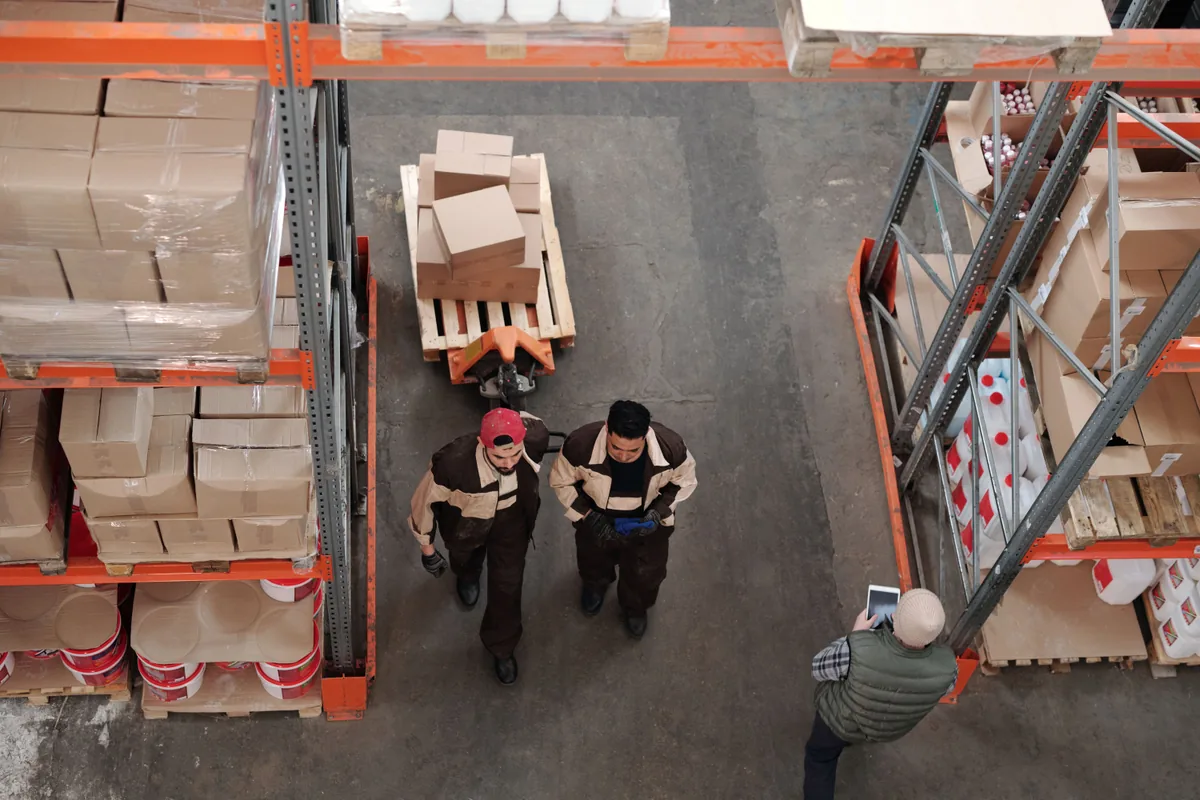
Describe the loaded pallet, not just the stock
A stock list tells a recipient what is coming. A transport brief also needs to show how that stock is presented for the journey. Record the number of loaded pallets, the complete dimensions of each and its gross weight, including the pallet and packaging. Mention anything that projects beyond the base or cannot travel with goods placed on top.
Keep those figures attached to the actual load being collected. If another carton is added after the quote request, update the measurements and weight. A pallet described from its empty base size may occupy more space once packed, and a generic pallet count does not establish vehicle suitability.
Treat collection and delivery as separate handling plans
A forklift at the sender’s warehouse says nothing about the recipient’s ability to unload. Ask each address to confirm its own arrangements: the equipment available, who will operate it, where the vehicle can stop and whether the goods can reach the receiving area safely.
If a tail lift, pallet truck or additional assistance is needed, include that in the enquiry. The vehicle’s payload, the lifting equipment’s limits and the site conditions are separate checks. Naming a Luton or requesting a tail lift does not confirm that the actual platform, surface or loading method suits the pallet.
Make the receiving slot usable
Obtain the correct delivery entrance, receiving hours and any appointment or purchase-order reference. Give a contact who knows about the delivery and can resolve an access question. A general switchboard or a sales contact working elsewhere may not be able to open a gate or release a loading bay.
Explain what the appointment covers. Some sites expect the vehicle to check in during a window; others allocate a specific unloading slot. Confirm whether the recipient can accept a partial delivery, and whether paperwork must be presented before the goods are released. These are details to agree, not assumptions to leave until arrival.
Keep the shipment identifiable at the handover
Use a clear consignment reference that the sender, receiving team and booking contact recognise. If several pallets belong to the same delivery, make the total count clear. Check that labels and paperwork describe the intended recipient and that old routing labels will not cause confusion.
Ask the people handing over and receiving the goods to check what is physically present. If packaging is damaged or the pallet count differs, record the factual difference and contact the booking team promptly. Do not assume that a note, photograph or signature settles liability or confirms an insurance outcome; those matters depend on the relevant arrangements.
Turn repeat work into a reusable brief
For recurring business deliveries, retain the useful site instructions while checking the changing facts each time: pallet count, gross weight, dates, contacts and equipment availability. A familiar destination can still have a different receiving team or a changed access restriction.
A concise template makes the next enquiry easier: complete pallet details; collection readiness; receiving slot; equipment at each end; access restrictions; reference numbers; and anything needing prior agreement. Regular requirements can be discussed through a trade enquiry, with the service, price and account arrangements agreed individually.